Museo (Uni Project)
Museo (Uni Project)
AR-powered gamified museum experience exploring engagement, learning, and behavioral design through the Octalysis framework.
AR-powered gamified museum experience exploring engagement, learning, and behavioral design through the Octalysis framework.
Context & Problem
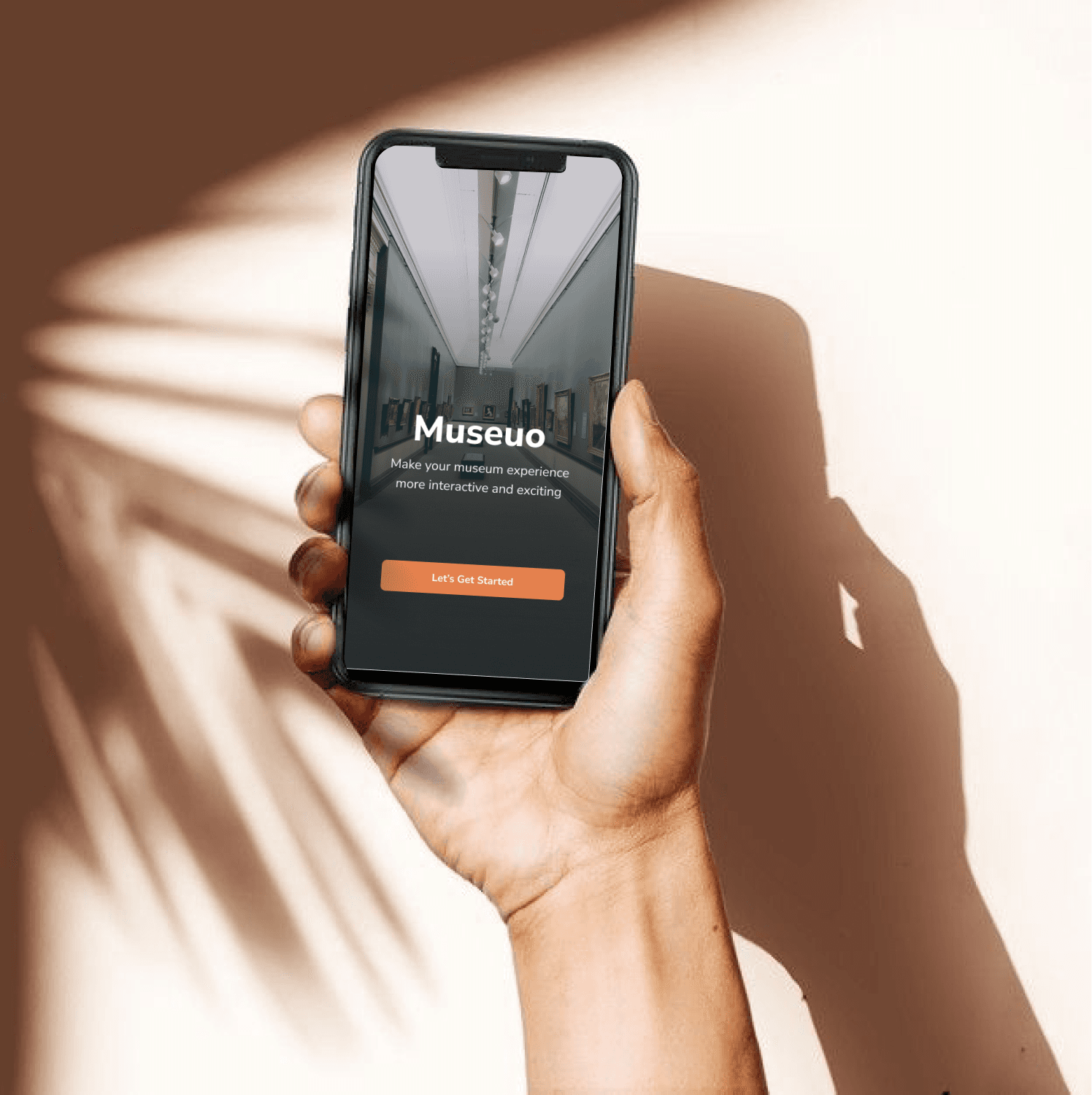
Museo was a university research project focused on exploring how gamification and augmented reality (AR) could create a more engaging museum experience.
Traditional museum visits are often passive and information-heavy, making it difficult for visitors to stay engaged, navigate exhibitions smoothly, and retain information after the visit. Through pre-study research, we identified several recurring challenges:
visitors wanted museum experiences to feel more interactive and enjoyable,
navigating and connecting different exhibitions could feel overwhelming,
information about artefacts was often difficult to remember afterward,
and many visitors lacked motivation to deeply engage with the content.
The goal of the project was not to maximize product efficiency or business impact, but to explore how behavioral design, gamification, and AR interactions could support engagement, curiosity, memorization, and social participation without overwhelming the actual museum experience.
Museo was a university research project focused on exploring how gamification and augmented reality (AR) could create a more engaging museum experience.
Traditional museum visits are often passive and information-heavy, making it difficult for visitors to stay engaged, navigate exhibitions smoothly, and retain information after the visit. Through pre-study research, we identified several recurring challenges:
visitors wanted museum experiences to feel more interactive and enjoyable,
navigating and connecting different exhibitions could feel overwhelming,
information about artefacts was often difficult to remember afterward,
and many visitors lacked motivation to deeply engage with the content.
The goal of the project was not to maximize product efficiency or business impact, but to explore how behavioral design, gamification, and AR interactions could support engagement, curiosity, memorization, and social participation without overwhelming the actual museum experience.
Research, Process & Exploration
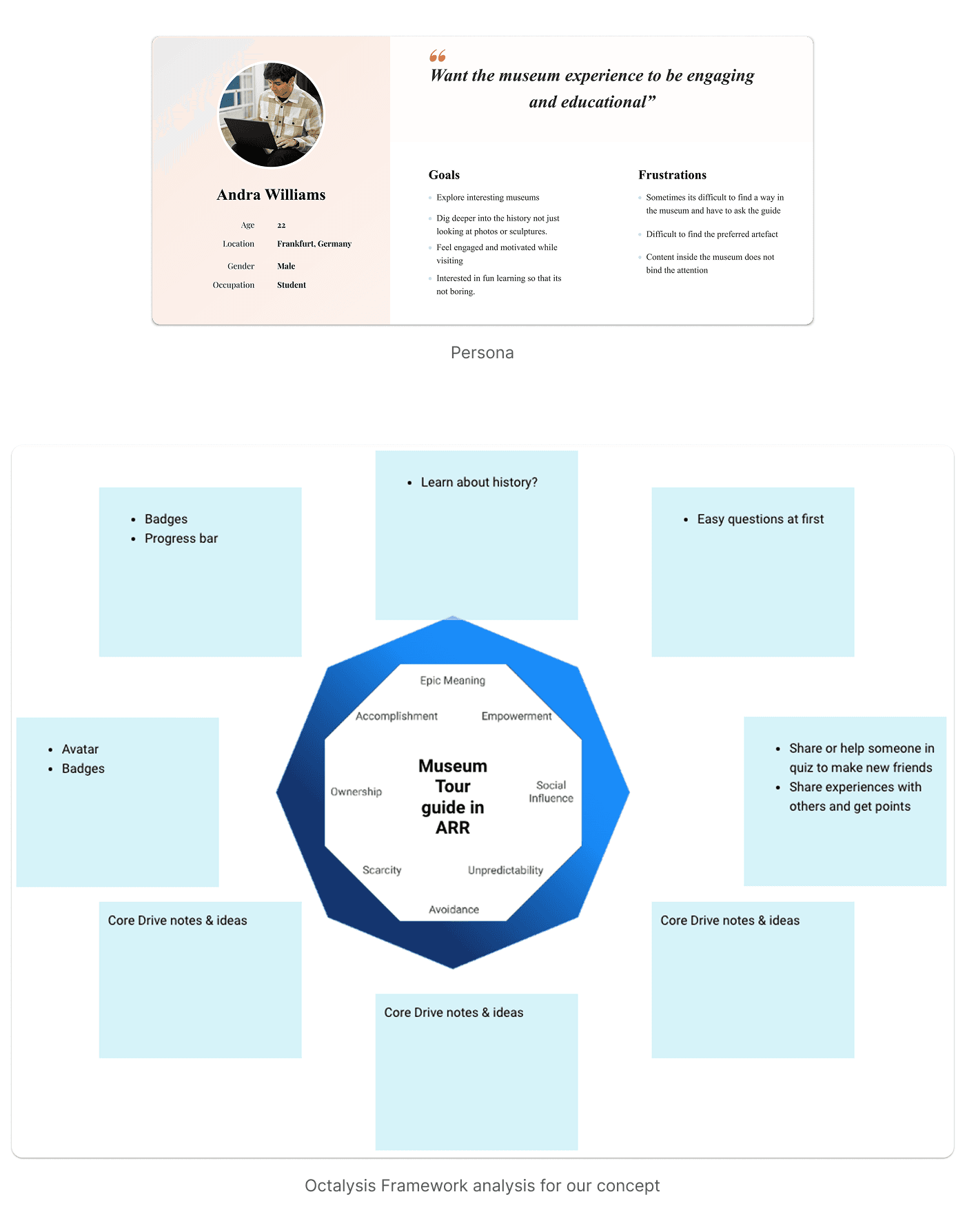
The project started with a pre-study using online surveys and secondary research to better understand visitor expectations, motivations, and learning challenges during museum visits.
Based on the findings, we explored how gamification mechanics and the Octalysis Framework could be applied to encourage engagement while still keeping the museum itself at the center of the experience.
The concept included:
an interactive AR guide character,
storytelling around artefacts,
Easter egg hunting,
quizzes and social challenges,
leaderboard progression,
avatar personalization,
and reward systems connected to exploration and learning.
A major part of the process involved analyzing which Octalysis core drives each feature supported, particularly:
accomplishment,
curiosity,
ownership,
and social influence.
The project started with a pre-study using online surveys and secondary research to better understand visitor expectations, motivations, and learning challenges during museum visits.
Based on the findings, we explored how gamification mechanics and the Octalysis Framework could be applied to encourage engagement while still keeping the museum itself at the center of the experience.
The concept included:
an interactive AR guide character,
storytelling around artefacts,
Easter egg hunting,
quizzes and social challenges,
leaderboard progression,
avatar personalization,
and reward systems connected to exploration and learning.
A major part of the process involved analyzing which Octalysis core drives each feature supported, particularly:
accomplishment,
curiosity,
ownership,
and social influence.
One of the biggest design challenges was balancing education and entertainment. The team intentionally avoided overusing gamification patterns because too many game mechanics risked shifting attention away from the museum itself and into the app experience. Instead of replacing the museum experience, the application was designed to support and enhance real-world exploration.
The process included:
brainstorming sessions,
interaction ideation,
Octalysis-based feature evaluation,
click prototyping,
A/B testing,
user interviews,
and iterative refinement based on participant and lecturer feedback.
Several concepts and terms were simplified after testing revealed confusion around progression systems and avatar motivation.
One of the biggest design challenges was balancing education and entertainment. The team intentionally avoided overusing gamification patterns because too many game mechanics risked shifting attention away from the museum itself and into the app experience. Instead of replacing the museum experience, the application was designed to support and enhance real-world exploration.
The process included:
brainstorming sessions,
interaction ideation,
Octalysis-based feature evaluation,
click prototyping,
A/B testing,
user interviews,
and iterative refinement based on participant and lecturer feedback.
Several concepts and terms were simplified after testing revealed confusion around progression systems and avatar motivation.
Final Solution
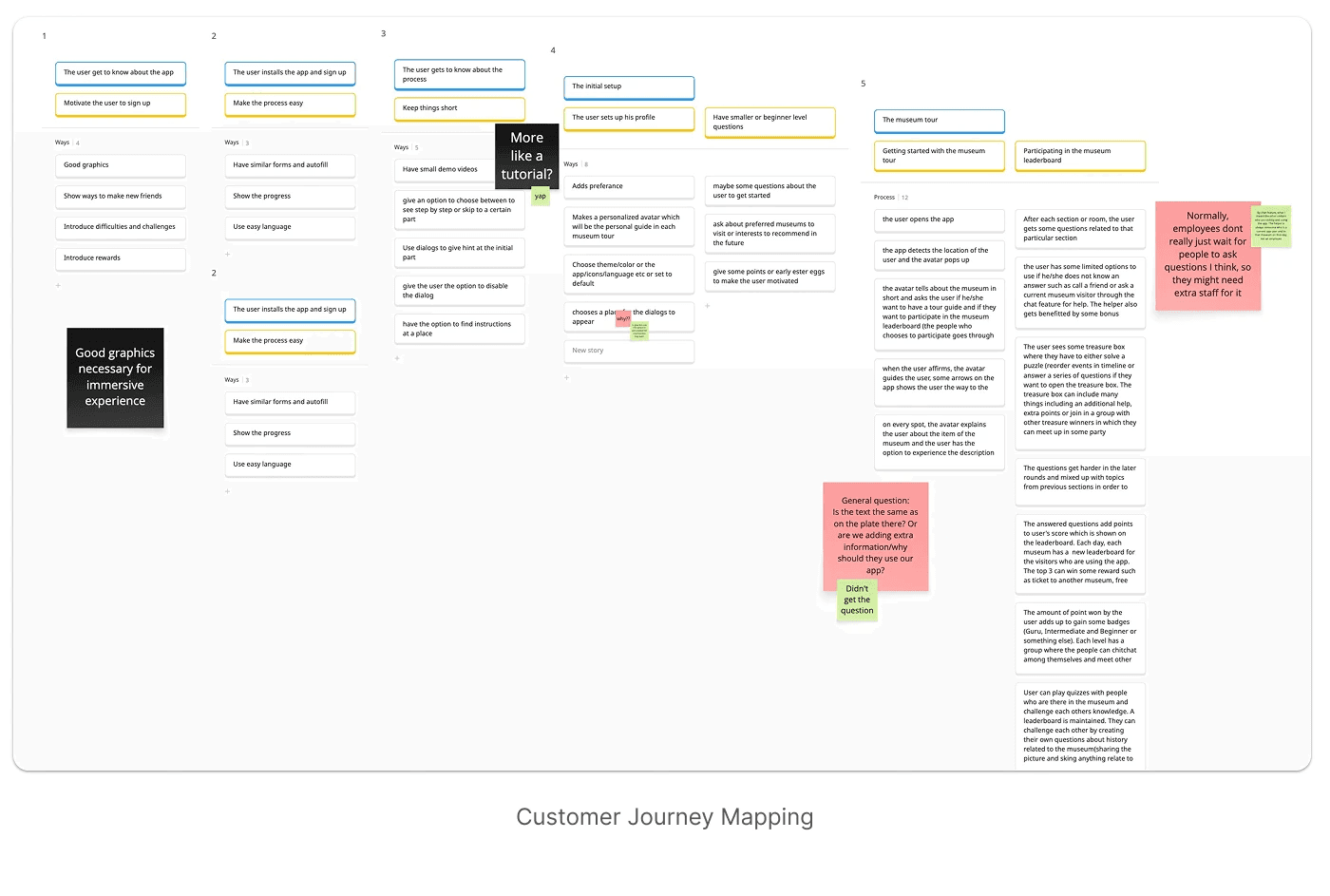
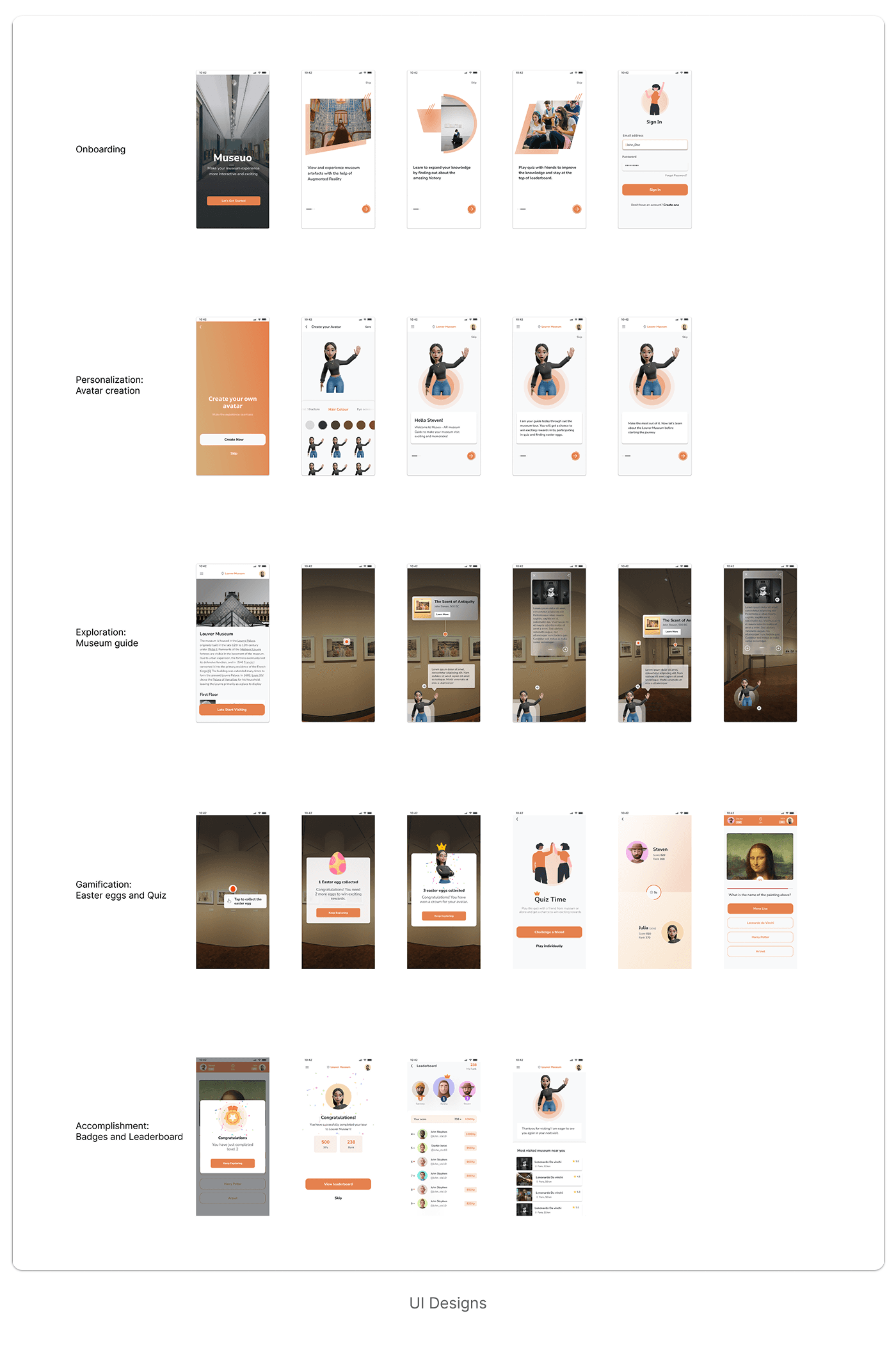
The final concept introduced a gamified museum companion app centered around an AR-based virtual guide.
The user journey included:
avatar introduction and personalization,
guided museum exploration,
AR-supported storytelling around artefacts,
quizzes and social challenges,
Easter egg collection,
points and badge systems,
leaderboard progression,
and unlockable avatar customizations tied to engagement and learning activities.
The AR guide acted as:
a navigation assistant,
a storytelling companion,
and a motivational layer for exploration and interaction.
The final concept introduced a gamified museum companion app centered around an AR-based virtual guide.
The user journey included:
avatar introduction and personalization,
guided museum exploration,
AR-supported storytelling around artefacts,
quizzes and social challenges,
Easter egg collection,
points and badge systems,
leaderboard progression,
and unlockable avatar customizations tied to engagement and learning activities.
The AR guide acted as:
a navigation assistant,
a storytelling companion,
and a motivational layer for exploration and interaction.
To avoid gamification overload, the experience was intentionally designed to remain lightweight and supportive rather than becoming a fully game-centered platform. Features were continuously adjusted to:
simplify interactions,
reduce distraction,
maintain focus on the museum environment,
and encourage meaningful engagement instead of constant stimulation.
The final concept explored how gamification and behavioral design can support learning, memorization, and participation while preserving the authenticity of the physical museum experience.
To avoid gamification overload, the experience was intentionally designed to remain lightweight and supportive rather than becoming a fully game-centered platform. Features were continuously adjusted to:
simplify interactions,
reduce distraction,
maintain focus on the museum environment,
and encourage meaningful engagement instead of constant stimulation.
The final concept explored how gamification and behavioral design can support learning, memorization, and participation while preserving the authenticity of the physical museum experience.
My Role & Learning
My Role
Conducted secondary research and participated in user interviews
Contributed to brainstorming and interaction ideation
Explored Octalysis core drives and mapped them to engagement features
Participated in UI design and click prototyping
Conducted A/B testing and participant testing sessions
Helped refine concepts, interactions, and terminology based on feedback
Presented and communicated design concepts with lecturers and incorporated iterative feedback
A large part of my contribution focused on balancing engagement mechanics with usability and ensuring the gamification elements supported — rather than distracted from — the museum experience.
My Role
Conducted secondary research and participated in user interviews
Contributed to brainstorming and interaction ideation
Explored Octalysis core drives and mapped them to engagement features
Participated in UI design and click prototyping
Conducted A/B testing and participant testing sessions
Helped refine concepts, interactions, and terminology based on feedback
Presented and communicated design concepts with lecturers and incorporated iterative feedback
A large part of my contribution focused on balancing engagement mechanics with usability and ensuring the gamification elements supported — rather than distracted from — the museum experience.
Learnings
The project reinforced how gamification can significantly improve engagement, exploration, and memorization when applied thoughtfully, but that overusing engagement mechanics can easily damage the core experience.
Key learnings included:
behavioral design should support user motivation without overwhelming the primary activity,
gamification is most effective when connected to meaningful interaction and progression,
and simplifying engagement systems often creates a more natural and enjoyable experience than maximizing the number of features or rewards.
The project also strengthened my understanding of designing for emotional engagement, behavioral motivation, and educational interaction using structured gamification frameworks such as Octalysis.
Learnings
The project reinforced how gamification can significantly improve engagement, exploration, and memorization when applied thoughtfully, but that overusing engagement mechanics can easily damage the core experience.
Key learnings included:
behavioral design should support user motivation without overwhelming the primary activity,
gamification is most effective when connected to meaningful interaction and progression,
and simplifying engagement systems often creates a more natural and enjoyable experience than maximizing the number of features or rewards.
The project also strengthened my understanding of designing for emotional engagement, behavioral motivation, and educational interaction using structured gamification frameworks such as Octalysis.